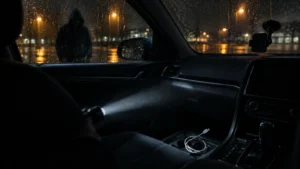
A thief can shatter your vehicle window, snatch your valuables, and vanish down the street in less than thirty seconds. Securing your cabin requires understanding exactly what prowlers look for before they strike.
Most property crimes targeting automobiles are crimes of quick opportunity rather than random acts. Knowing the fifteen items thieves prioritize lets you eliminate targets before parking your car tonight.
While obvious high-ticket valuables attract instant attention, the fifth item on this list compromises your entire household security. Removing these items takes seconds and saves thousands in unexpected repairs.
The Mechanics of Modern Vehicle Larceny
Prowlers do not browse parking lots aimlessly. Experienced street thieves scout rows of parked cars, peering through window glass with specialized penlights to spot reflections and silhouettes.
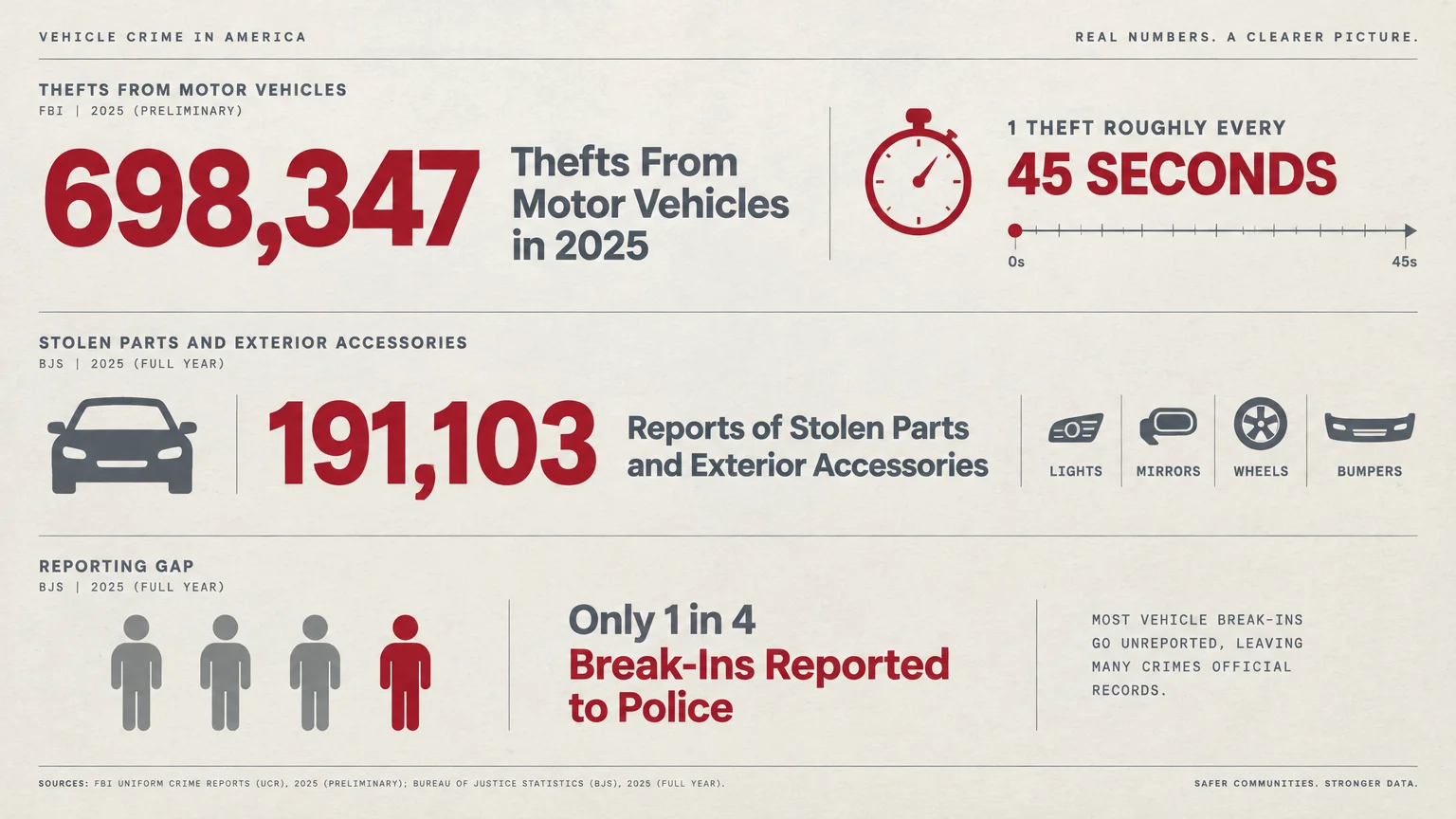
According to official FBI crime reporting data, law enforcement agencies recorded 698,347 thefts from motor vehicles across the United States in 2025. That breaks down to an interior vehicle theft roughly every 45 seconds.
In addition to interior cabin break-ins, the FBI documented 191,103 separate reports of stolen vehicle parts and exterior accessories during the same period. Auto-related theft remains one of the most persistent urban property crimes today.
The actual frequency of these crimes runs far higher than official statistics indicate. Bureau of Justice Statistics records reveal that victims report only about 1 in 4 vehicle break-ins to the police.
Many drivers mistakenly assume their automobile insurance protects everything resting inside the cabin. Standard auto insurance policies, including comprehensive coverage, do not cover personal belongings stolen from your vehicle.
You must file claims for personal items through homeowners or renters insurance policies instead. Those claims carry separate deductibles and can trigger premium hikes on your residential policy.
Thieves target everyday items that offer immediate resale value, quick street trades, or direct access to your identity and home. Knowing what catches a thief’s eye helps you protect your car and your peace of mind.
The 15 Targets Thieves Look for First
1. Charging Cables and Mounts
A loose charging cord hanging from a dashboard port signals the presence of an expensive device. Prowlers assume you tucked a smartphone, tablet, or portable battery into the center console or under the seat.
Even an empty dashboard cradle or magnetic phone mount suggests you might have left an expensive device nearby. Thieves will smash a window solely to check the glove box when they see charging accessories.
Stash your power cables, adapters, and magnetic cradles inside closed compartments before reaching your destination. Leaving a tidy, bare dashboard removes the easiest bait on your commute.
2. Gym Bags, Duffels, and Backpacks
Any bag left on a car seat acts as a mystery prize for an opportunistic criminal. A thief cannot tell whether your canvas duffel holds sweaty workout clothes or a high-end business laptop.
Prowlers break vehicle glass first and check the contents of the bag later. They know they can grab a shoulder strap through a broken window in less than three seconds.
Never rely on a jacket or a towel draped over a bag on the floorboard. Experienced thieves recognize concealed shapes immediately and view covered items as high-value targets.
3. Purses, Wallets, and Handbags
Leaving a purse or wallet in an unattended car provides thieves with an immediate financial payoff. Criminals tap stolen cards at nearby automated fuel pumps or pharmacies within minutes of the smash.
Even an empty clutch or coin purse left on the passenger seat triggers an aggressive entry. The cost to replace broken tempered glass often dwarfs the cash left inside.
Carry your identification, payment cards, and credentials with you whenever you step away from the driver seat. If you must leave a bag behind, lock it in the trunk before parking.
4. Unsecured Firearms
Unsecured handguns represent one of the most dangerous and heavily sought targets in parked vehicles. Stolen weapons feed illicit street networks and create severe legal liabilities for lawful gun owners.
According to national research from Everytown for Gun Safety, vehicles remain the primary source of stolen firearms in the country. At least one firearm is stolen from an automobile every 9 minutes.
The rate of gun thefts from parked vehicles has tripled over the past decade, surging by more than 200%. Thieves deliberately scout glove boxes, center consoles, and under-seat trays for handguns.
State laws increasingly penalize improper vehicular storage. For example, Colorado enacted strict mandates requiring unattended firearms in vehicles to stay locked inside hard-sided containers out of plain view.
5. The Garage Door Opener
Most drivers clip their remote garage door opener directly onto the overhead visor without a second thought. This common habit hands a thief an electronic key into your private residence.
Prowlers deliberately target vehicles parked overnight in residential driveways or curbside stalls. Once inside the cabin, they press the remote button to walk straight into your attached garage.
From the garage, an intruder often finds unlocked interior doors leading directly into the living quarters. They can ransack your house while you sleep upstairs, unaware of the intrusion.
Never leave a mechanical garage opener clipped to an exposed sun visor in an unattended vehicle. Upgrade to a modern smartphone-controlled opener system or take the physical remote indoors every evening.
6. Registration and Insurance Documents
Thieves hunt through glove compartments specifically to locate vehicle registration certificates and insurance cards. These documents list your full legal name, residential address, and vehicle identification details.
Corrupt actors use this paperwork to produce fraudulent titles, clone vehicle identities, and execute identity theft schemes. In driveway break-ins, criminals pair your registration document with your garage door opener.
This pairing tells the intruder that the car parked outside belongs to the house right in front of them. Never leave documents revealing your home address sitting unprotected in your glove box.
Carry a digital copy of your insurance card on your smartphone whenever local laws permit. If you must carry paper copies, redact your home address or lock documents inside a secure lockbox.
7. Spare Keys and Smart Fobs
Leaving a spare house key, valet key, or backup key fob inside your vehicle invites catastrophe. Thieves search center consoles, sunglass compartments, and coin trays for these secondary keys.
Modern proximity fobs left anywhere inside the cabin allow thieves to drive the entire car away instantly. Prowlers simply press the start button, put the car in gear, and flee the scene.
The National Insurance Crime Bureau vehicle theft statistics show that 659,880 vehicles were reported stolen nationwide in 2025. That translates to roughly one vehicle stolen every 48 seconds.
Total thefts dropped 23.2% from 2024 and plunged 35.4% from the peak recorded in 2023. Preliminary data shows thefts fell another 21% through mid-2026, totaling 268,415 stolen vehicles.
The top stolen models nationwide in 2025 were the Hyundai Elantra, Honda Accord, Hyundai Sonata, and Chevrolet Silverado 1500. Leaving keys inside makes stealing these popular models completely effortless.
8. Designer Sunglasses
A pair of premium brand sunglasses resting on your dashboard or console attracts quick break-in attempts. Prowlers recognize luxury eyewear logos instantly and know they fetch rapid cash at pawnshops.
Even branded hard-shell sunglass cases signal value to someone shining a flashlight into your side glass. A thief will break a side window just to confirm what brand sits inside the case.
Keep your eyewear stored out of sight when exiting your automobile. Use an overhead covered bin, place them inside your personal bag, or take them indoors with you.
9. Prescription Medications
Prescription pill bottles visible in cupholders or door pockets represent an irresistible target for substance-dependent thieves. Painkillers, sedatives, and stimulants command immediate resale value on the street.
A prowler who spots a pharmaceutical label will shatter your window without hesitating. They take the entire bottle regardless of the medication type, sorting through pills later.
Beyond vehicle damage, losing vital medication disrupts your health and requires difficult pharmacy replacements. Always keep your prescriptions on your person rather than storing doses inside your car.
10. Power Tools and Trade Equipment
Work trucks and contractor vans are prime targets for organized vehicle theft rings. Cordless drills, impact drivers, laser levels, and socket sets carry high resale value on secondary markets.
Thieves frequently target contractor vehicles parked outside home improvement centers or residential job sites. Prying open a tool chest or breaking utility cap glass takes only seconds with a pry bar.
Mark all tool bodies with engraved identification numbers or brightly colored spray paint to deter resale. Install dedicated steel locking boxes and auxiliary deadbolts on commercial work vehicles.
11. Aftermarket Audio and Touchscreens
Custom subwoofers, amplifiers, and oversized aftermarket touchscreen displays attract seasoned car prowlers. Amplifiers mounted under seats or sub enclosures in hatchbacks can be disconnected and hauled away rapidly.
High-power sound systems also announce your car’s contents long before you park. Prowlers standing nearby listen for deep bass frequencies and watch where those vehicles park.
Turn your sound system down several blocks before arriving at your home or parking facility. Ensure custom audio components remain hidden beneath factory cargo covers or bolted directly to the chassis.
12. Catalytic Converters
Catalytic converter theft remains a severe threat for drivers parking in driveways and commercial parking lots. Professional thieves slide beneath your chassis with cordless reciprocating saws and cut converters free in two minutes.
According to a CARFAX vehicle risk analysis, thieves stole more than 137,000 catalytic converters during 2025 alone. Law enforcement agencies continue warning motorists about fresh regional theft spikes.
Thieves target converters to harvest precious internal metals, specifically rhodium, platinum, and palladium. Rhodium prices surged to $11,000 per ounce before settling between $8,000 and $8,600 per ounce.
Platinum prices exceed $1,700 per ounce, while palladium commands roughly $1,300 per ounce on industrial commodity markets. These extreme metal values fuel black market demand across metropolitan areas.
Thieves sell standard stolen converters for $25 to $300, while hybrid converters fetch up to $1,400. Meanwhile, vehicle owners face massive out-of-pocket replacement costs ranging from $2,900 to more than $3,500.
The five most targeted vehicles for converter theft are the Ford F-150, Hyundai Tucson, Ford Explorer, Ram 2500, and Chevrolet Silverado. Installing protective steel shields or rebar cages deters cutting attempts.
13. Factory Alloy Wheels and Tires
Factory alloy wheels, particularly from popular sport trims, remain highly liquid commodities on the street. A crew with rolling floor jacks and cordless impact wrenches can strip four wheels in five minutes.
Thieves leave the victimized vehicle resting directly on concrete cinder blocks or wooden cribbing. This causes severe rotor, suspension, and rocker panel body damage alongside the loss of the wheels.
Standard wheel locks offer basic deterrence, but determined thieves bypass them with reverse-threaded removal sockets. Park tightly against curbs with your steering wheel turned hard at a 45-degree angle.
14. Tailgates and Removable Seats
Pickup truck tailgates represent an overlooked target that requires zero tools to remove from unlocked latches. A thief unhooks the support cables, angles the tailgate hinge, and lifts the assembly free in seconds.
Modern tailgates house backup cameras, electronic latch solenoids, and step ladders, driving replacement costs past two thousand dollars. Removable third-row SUV seats also face heavy demand on automotive resale platforms.
Keep your pickup tailgate locked with the factory key or an electronic latch actuator tied to your central locks. Install an aftermarket hose clamp or locking hinge bracket around the right-side pivot hinge.
15. Retail Shopping Bags and Shipping Boxes
Leaving department store bags, designer brand packaging, or cardboard delivery boxes in your cabin creates irresistible bait. A thief assumes the packaging contains brand-new merchandise that can be returned for store credit.
Even an empty shipping box sitting on the back seat triggers a smash-and-grab attempt. The criminal shatters the glass, grabs the sealed cardboard container, and inspects the contents down the block.
Place all shopping bags in the trunk before you leave one shopping center to drive to another. Never transfer items into your trunk while standing in the parking lot where you plan to stay.
Strategic Cabin Defense: Practical Routines
Preventing vehicle larceny requires developing consistent personal security habits every time you shut your engine off. Following standard NHTSA vehicle safety guidelines dramatically lowers your statistical risk of experiencing a break-in.
Establish a strict 30-second sweep routine before stepping out of your driver seat. Scan the passenger floorboard, seat surfaces, and dashboard for cords, cases, papers, or loose currency.
Choose well-lit parking stalls positioned near active building entrances or security camera fields of view. Thieves prefer dark corners and parking spots shielded by utility vans or commercial trash dumpsters.
Window tint films make it harder for casual passersby to see inside your vehicle during bright daylight. However, prowlers carrying high-lumen flashlights can still illuminate interior surfaces through dark tint films at night.
Security tint films offer practical mechanical protection by bonding the tempered glass together when struck. The film prevents the window from falling inward instantly, forcing a thief to abandon the noisy attack.
Professional Insights on Vehicle Protection
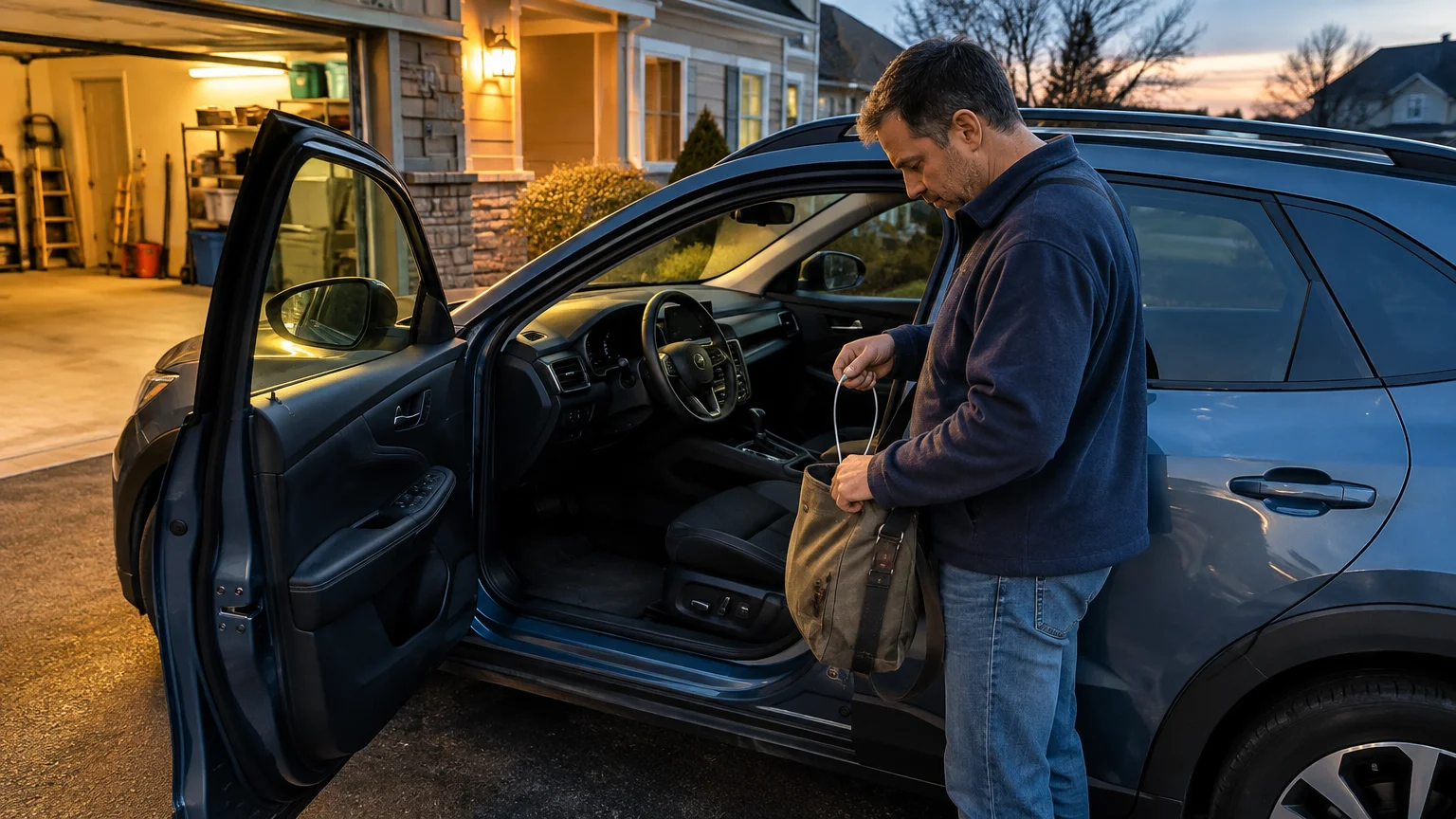
Automotive security specialists emphasize that thieves operate on strict time budgets when working parked rows. An attack that cannot be completed within sixty seconds carries an unacceptable risk of apprehension.
Fleet managers recommend layering visible deterrents to persuade opportunistic criminals to move down the street. Visible steering wheel locks, bright alarm indicator LEDs, and warning decals create psychological barriers for prowlers.
Automotive mechanics highlight that physical damage from a break-in often exceeds the value of stolen goods. A shattered window scatters abrasive glass fragments across upholstery seams, air vents, and seat tracks.
Vacuuming broken safety glass thoroughly requires pulling seat tracks and carpet trim pieces away from the floor. Removing visible targets from your cabin spares you from extensive interior remediation work.
Frequently Asked Questions
What physical tools actually deter car break-ins?
Hardened steering wheel locks, catalytic converter shields, and hardened steel lockboxes inside the trunk provide proven deterrence. Physical locks increase the time and noise required to access your vehicle and property.
Thieves avoid vehicles that require noisy battery-powered angle grinders or heavy pry bars to breach. Layering mechanical locks signals to a prowler that your automobile is a difficult target.
How much does break-in damage cost compared to replacement claims?
Replacing a single tempered side window generally costs between $250 and $500, excluding body scratch repairs. If a thief damages door seals, interior leather, or dashboard components, bills often exceed $1,500.
Because these repairs fall under comprehensive auto insurance, you must pay your selected deductible out of pocket. Filing claims for stolen belongings requires a separate deductible on your homeowners policy.
Can you install vehicle security upgrades yourself, or should you hire a professional?
Basic hardware like tailgate hinge locks, steering wheel bars, and portable vehicle safes install easily with common tools. Any motivated car owner can complete these mechanical installations in their driveway in minutes.
Complex upgrades like shock-sensing alarms, catalytic converter shields, and glass-break sensors require professional installation. Experienced technicians integrate these devices safely into modern vehicle multiplex wiring harnesses without voiding warranties.
Do smart tags and Bluetooth trackers prevent interior car theft?
Bluetooth trackers like Apple AirTags or Tile sensors do not prevent break-ins or physical theft from occurring. They only help law enforcement track items after a suspect has already fled the scene.
Savvy thieves carry scanning devices that detect Bluetooth signal frequencies emitted by hidden trackers within seconds. Use trackers as secondary recovery aids, but rely on clean cabin habits for primary defense.
Securing Your Vehicle Today
Protecting your automobile from prowlers does not require expensive high-tech gear or hours of tedious maintenance. It begins with establishing disciplined habits every time you park your vehicle.
Take two minutes tonight to step outside and perform an honest audit of your car interior. Clear your visor of garage door remotes and shred any unnecessary paperwork stored in your console.
Move charging cables, sunglasses, and emergency equipment completely out of sight into closed glove compartments or your trunk. Eliminating visible targets ensures thieves pass your car by and keep walking down the street.