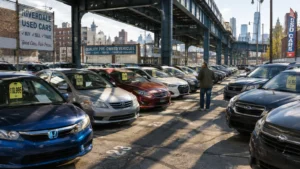
Buying a depreciated luxury coupe feels like winning the lottery until a dashboard warning triggers a five-figure estimate. City traffic, pothole-scarred streets, and steep labor rates expose fragile engineering fast.
Before you sign a bill of sale, you need to know which performance icons spend more time on hydraulic lifts than on open pavement. Repair bills climb faster than ever across urban neighborhoods.
You will discover the five high-maintenance models mechanics flag most often, learn their exact failure points, and walk away with practical steps to protect your bank account.
Why Urban Driving and Rising Labor Rates Expose Weak Sports Cars
Performance coupes endure brutal stress in dense metro areas, where stop-and-go congestion traps extreme engine heat under tight hoods. Short neighborhood errands prevent motor oil from reaching operating temperature, which accelerates moisture buildup and internal wear.
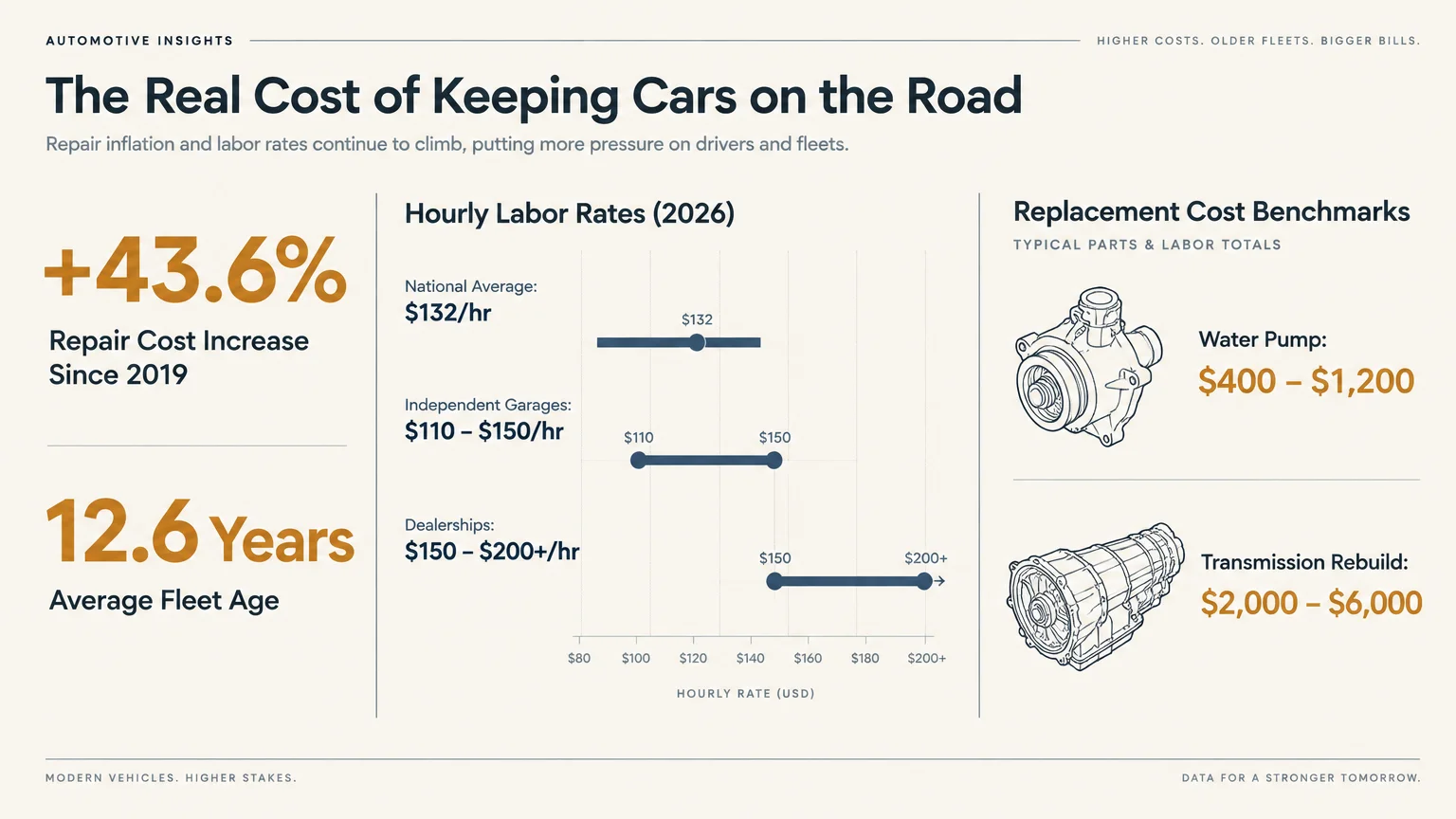
When a major component fails in 2026, repair invoices hit much harder than they did a few years ago. Compiled 2026 data from RepairPal, the Bureau of Labor Statistics, and S&P Global Mobility shows repair costs have surged 43.6% since 2019.
Across the United States, drivers now spend an average of $936 per year on vehicle maintenance while keeping an aging fleet—averaging a record 12.6 years old—on the road. High-strung sports cars amplify those baseline expenses dramatically.
Skilled labor drives much of that spike, especially when you visit specialized urban service bays. Point-of-sale data compiled by Fixxr in September 2026 puts the national average hourly labor rate at $132.
Independent garages typically charge $110 to $150 per hour, whereas dealerships regularly bill $150 to more than $200 hourly. A 2025 PartsTech report cited by AAA automotive repair guidance shows nearly half of general shops price labor between $120 and $159 per hour.
Luxury and European performance cars routinely exceed those mainstream brackets because technicians need specialized diagnostic computers and tight-clearance tools. Standard benchmarks like $250 to $600 per axle for front brakes climb rapidly on oversized performance hardware.
Even routine cooling and drivetrain repairs carry sobering price tags at modern shop rates. Water pump replacements run $400 to $1,200 on typical vehicles, while transmission rebuilds or replacements stretch from $2,000 to $6,000 before exotic-car markups apply.
Wait times for backordered European or Japanese performance parts also punish urban commuters who rely on one vehicle. Sitting in a rental car for three weeks adds hundreds of hidden dollars onto an already painful mechanical invoice.
Complex electronics add another layer of trouble for modern drivers navigating daily traffic. The 2026 J.D. Power dependability data recorded an industry average of 204 problems per 100 vehicles after three years—up from 2025 and the highest mark since 2022.
Infotainment faults led those complaints at 56.7 problems per 100 vehicles, alongside 1.3 million digital dashboards recalled across 12 automakers. High-tech powertrains fared even worse, with plug-in hybrids hitting 281 problems per 100 vehicles and pure electric vehicles reaching 237.
Early ownership numbers tell a cautionary story about complexity versus long-term durability. Although the June 2026 J.D. Power Initial Quality Study logged 169 problems per 100 vehicles for luxury brands in the first 90 days, out-of-warranty aging punishes intricate sports cars severely.
Five Sports Cars That Keep Mechanics Busy
Experienced technicians see clear patterns when exotic and high-performance coupes roll onto the service drive. Five models stand out for punishing repair costs, fragile hardware, and scarce parts that turn bargain-priced used buys into wallet-draining headaches.
1. Maserati GranTurismo
Steep depreciation makes an older Maserati GranTurismo look tempting in online classifieds, yet seasoned specialists steer shoppers straight past it. Mechanic Alan Gelfand, owner of German Car Depot, ranked the GranTurismo first on his September 2026 list of sports cars he would never buy.
While used purchase prices have plummeted, authentic Italian replacement parts remain stubbornly expensive. Qualified independent service centers are also scarce outside major coastal hubs, which leaves owners trapped paying steep dealership markups.
Even trouble-free ownership demands a serious annual budget right from the start. Maserati of Fort Lauderdale estimated in January 2026 that routine scheduled maintenance averages roughly $1,500 per year during early ownership years, long before major wear items require attention.
If you eye a 2007 to 2019 GranTurismo powered by the Ferrari-derived F136 V8, listen closely during cold starts. Specialist shop Foreign Automotive warns that camshaft variator failure—covered by a Maserati technical bulletin on early wet-sump engines—produces a distinct metallic rattle.
Fixing those failing variators is not a quick weekend project in a home driveway. Mechanics must open the front of the engine, pushing dealership repair bills past $12,000 CAD according to Foreign Automotive.
Federal safety records reveal additional reasons to scrutinize any GranTurismo’s service folder before making an offer. Records compiled by VinSpectorAI using federal oversight data show eight NHTSA safety recall campaigns on record for the GranTurismo.
Urban parking structures and tight speed bumps also punish the coupe’s low front splitter and heavy curb weight. Replaceable suspension bushings and oversized tires wear rapidly when you commute across cracked city pavement.
Before considering one, demand documented proof that wet-sump variator bulletin work has already been completed. You should also confirm that a qualified Italian-car specialist operates within affordable towing distance of your neighborhood.
2. Jaguar F-Type
Sleek styling and an aggressive exhaust note make the Jaguar F-Type an urban head-turner, yet its long-term reliability record raises immediate red flags. Industry tracking shows owners pay a hefty premium just to keep these British coupes roadworthy.
According to RepairPal reliability and cost benchmarks, Jaguar averages $1,123 per year in repair expenses—making it one of the costliest brands on the road. Owners average 0.6 repair shop visits annually, carrying a 14% probability that any repair will be severe.
Long-horizon financial projections look even bleaker if you plan to keep an F-Type past its factory warranty. Data from CarEdge long-term ownership projections estimates Jaguar models average $15,617 in maintenance and repairs over their first 10 years.
Nearly half of those aging vehicles face major mechanical setbacks as miles accumulate. CarEdge calculates a 44.88% chance of a major repair exceeding $500 in parts and labor within that 10-year window.
Even basic preventive care costs significantly more on this specific chassis than on most luxury sedans. Auto Scope, cited by MotorBiscuit, identifies the F-Type as Jaguar’s priciest model to maintain, noting that a single oil change runs $250 to $370.
Stop-and-go city commuting compounds those expenses by baking plastic cooling pipes and draining sensitive batteries during short trips. When an F-Type sits in street traffic without steady airflow, underhood heat degrades rubber hoses and brittle connectors quickly.
Always budget for specialist diagnostics and verify clean coolant-system service records before bringing an F-Type home. Never buy one without confirming full electrical functionality across every window switch, infotainment screen, and active exhaust valve.
3. BMW M Models (M3, M4, and E60 M5)
BMW’s motorsport division builds thrilling chassis, yet high-mileage M cars regularly test the patience and savings of city drivers. Complex cooling circuits, high-revving internals, and dense onboard computers leave very little room for neglected maintenance.
RepairPal puts BMW’s overall brand average at $968 per year in repairs, while CarEdge projects roughly $16,000 in 10-year maintenance and repair costs. That 10-year total sits approximately $4,000 above the broader luxury-brand average.
Worse still, CarEdge data cited by Money Digest in February 2026 shows BMW carries a 47.26% probability of suffering a major repair. High-output M variants amplify that risk because their bespoke components cost far more than standard 3 Series or 5 Series parts.
Mechanics issue especially urgent warnings about the E60-generation BMW M5 and its high-strung V10 engine. Technicians routinely see rod bearing wear, failing throttle actuators, and intricate electronic faults that generate repair invoices running into the thousands.
Newer turbocharged M3 and M4 coupes still demand deep pockets beyond the service bay. A Bankrate analysis of 15 luxury models, including the BMW M4, found owners pay an average of $1,223 more annually for full-coverage insurance than drivers of mass-market equivalents.
Urban drivers also frequently encounter illegal exhaust modifications or harsh aftermarket engine tunes on used M cars. Tampering with emissions hardware can fail state inspections and void remaining powertrain coverage, leaving you stuck paying steep restoration bills.
If you shop for a used M car, insist on an independent oil analysis to check for bearing metal shavings before paying a dime. Verify stamped receipts for throttle actuators, cooling hardware, and transmission servicing rather than trusting vague seller promises.
4. Porsche 911 (Turbo, GT Variants, and 718 RS)
Porsche enjoys an enviable reputation for track durability, yet top-tier 911 variants punish owners when specialized wear items come due. High-output Turbo and GT models require proprietary hardware that most neighborhood garages simply cannot source or service.
German Car Depot owner Alan Gelfand specifically warned shoppers against buying used 911 Turbos in September 2026. He points to scarce authorized service centers alongside steep labor, brake, and tire costs that catch second-hand buyers completely off guard.
Even routine dealership upkeep on track-focused Porsches reaches eye-watering numbers quickly. Motorinsiders reported in June 2026 that normal dealer servicing on a Porsche GT3 exceeds $2,000, while do-it-yourself owners spend over $1,000 on parts alone.
Longer ownership timelines confirm that Stuttgart engineering demands substantial annual reserves. RepairPal estimates 911 variants such as the 997-generation 911 Turbo average $1,072 per year, while CarEdge pegs newer 911 models at $10,760 over 10 years with a 41.7% major-repair chance.
Safety recalls have also sidelined some of the brand’s newest flagship machines. In October 2026, federal regulators issued an urgent do-not-drive recall under campaign 26V682 for select 2024 Porsche 911 variants.
That emergency order covers Carrera GTS, GT3, GT3 RS, Turbo, and Turbo S models alongside 718 Cayman GT4 RS and 718 Spyder RS vehicles. Affected cars faced a severe hazard because center wheel locks could fracture and allow a wheel to detach while driving.
City driving introduces practical headaches for low-slung Porsches beyond service intervals too. Steep parking-garage ramps scrape fragile front lips, while wide rear performance tires pick up construction nails that often require replacing pricey matched pairs.
Always pull an engine over-rev report from the car’s computer and verify wheel-lock recall compliance before purchasing any high-end Porsche. Inspect brake rotor condition carefully, because carbon-ceramic replacements can rival the price of an entire economy commuter car.
5. Nissan GT-R
Nicknamed Godzilla for its giant-slaying acceleration, the Nissan GT-R turns brutal launch physics into brutal maintenance demands. Used listings look appealing compared with European exotics, yet mechanical realities quickly erase any upfront savings.
Alan Gelfand placed the GT-R second on his September 2026 list of sports cars mechanics avoid buying used. Expensive tires and oversized brakes drain budgets rapidly, even when nothing actually malfunctions.
Routine upkeep costs dwarf what mainstream Nissan owners ever experience at the service counter. RepairPal estimates annual maintenance on a GT-R at $920 per year, nearly double Nissan’s overall $500-per-year brand average.
Strict transmission and drivetrain fluid intervals are non-negotiable if you want to avoid catastrophic gearset damage. Unfortunately, many used GT-Rs suffer from harsh aftermarket modifications and repeated launch-control abuse from previous owners.
Heavy tuning raises cylinder pressures and stresses dual-clutch gearboxes far beyond factory tolerances. Unverified modifications can also violate local noise ordinances or state emissions laws, turning daily urban commutes into costly legal headaches.
Walk away immediately if a seller cannot provide unedited ECU logs and receipts proving timely transmission and differential servicing. Have a GT-R specialist inspect the bellhousing, transmission temps, and boost-control hardware before making any commitment.
Diagnostic Insights and City Ownership Strategies That Save Thousands
Smart habits turn unpredictable sports car ownership into a calculated, manageable experience. Knowing what to listen for, how to pick a trustworthy garage, and when to swap platforms saves thousands over a five-year horizon.
Spot Early Warning Signs Before Failure Strikes
Catching mechanical trouble early prevents minor wear from snowballing into five-figure engine or gearbox rebuilds. Start every cold morning by rolling down your window before shifting into drive and listening carefully to the engine bay.
A brief metallic rattle at startup often signals failing camshaft variators or starved timing-chain tensioners. Ignore that noise for a few months, and internal timing wear can destroy pistons and valves within seconds.
Pay close attention to dashboard warnings, sluggish infotainment reboots, and erratic battery voltage in slow traffic. With infotainment glitches topping industry reliability complaints, electrical gremlins frequently point to weak batteries or failing control modules.
City potholes and raised expansion joints also batter low-profile tires, forged wheels, and adaptive dampers without obvious visual damage. Steering-wheel vibration under braking usually means warped rotors, which cost $250 to $600 per axle on mainstream cars and far more on exotics.
Coolant smells after parking or sweet steam near the grille demand immediate shutdown and towing rather than gambling on a short drive home. Catching a $400 to $1,200 water pump leak early saves you from warping aluminum cylinder heads.
Build an Urban Maintenance and Seasonal Prep Routine
Driving a sports car in the city requires smarter habits than simply following a dashboard service minder. Short errands leave condensation inside engine oil and exhaust pipes, while traffic crawls cook rubber hoses and underhood seals.
Take your car for a steady 20-to-30-minute highway loop at legal speeds every week or two to burn off fuel dilution and moisture. Plug a smart battery tender into your outlet if the coupe sits parked for several days.
Treat seasonal weather shifts as mandatory inspection checkpoints for tires, fluids, and alignment angles. Cold mornings drop tire pressures quickly, starving wide summer performance rubber of grip and accelerating uneven shoulder wear on rough city asphalt.
Schedule four-wheel alignments every spring after winter potholes disappear, and inspect inner tire sidewalls that hide cord damage from casual glances. Never stretch oil or transmission fluid intervals past factory severe-duty schedules, because urban stop-and-go counts as severe use.
Checking federal safety databases should also become part of your annual routine before renewing registration. Use the official NHTSA recall database to search your 17-digit vehicle identification number in under a minute.
Federal law protects your wallet whenever safety defects surface, regardless of vehicle age or previous ownership. Under NHTSA regulations, authorized dealerships must perform safety recall repairs free of charge even after factory warranties expire or cars change hands.
Choose the Right Shop and Verify Every Estimate
Where you take your sports car matters just as much as how diligently you maintain it. Dealerships charge $150 to $200 or more per hour, making them essential mainly for warranty work and free federal recall campaigns.
Once your factory coverage ends, build a relationship with a reputable independent marque specialist charging $110 to $150 hourly. Dedicated independent technicians often spot recurring model-specific flaws—like rod bearings or variator rattles—much faster than generalist mechanics.
Always request a written, itemized estimate listing exact part numbers and diagnostic labor hours before authorizing work. Ask the service writer to save worn or broken parts in a box so you can verify what actually failed.
Verify that any replacement components carry solid parts-and-labor warranties and meet factory specifications. Cutting corners with bargain aftermarket sensors on sensitive European or Japanese performance cars usually triggers repeat diagnostic fees within months.
Compare Smarter Performance Alternatives Before Buying
You do not have to sacrifice thrilling acceleration or sharp handling just to stay out of the repair bay. Several modern sports cars deliver serious street performance with dramatically lower 10-year repair exposure.
CarEdge estimates the Toyota GR Supra costs just $5,298 over 10 years for maintenance and repairs, carrying only a 12.98% probability of a major repair. That reliability margin makes it far friendlier to daily budgets than exotic rivals.
Domestic rear-drive icons also perform surprisingly well when mechanics compare long-term upkeep spreadsheets. CarEdge estimates the Ford Mustang averages $7,830 to $7,914 over 10 years with a 21.47% major-repair risk, while the Chevrolet Corvette Stingray averages $8,332 with a 21.03% major-repair chance.
Even sensible performance picks still warrant careful recall research and realistic budgeting for turbocharged or all-wheel-drive hardware. For example, CarEdge estimates the Subaru WRX at $6,655 over 10 years—roughly $909 above typical popular sedans—because its turbocharger and Symmetrical AWD add complexity.
High-performance American trims and electric crossovers occasionally face targeted factory campaigns too. GM voluntarily recalled 2023 to 2026 Corvette Z06 models equipped with the LT6 engine and left-side radiator fan, plus 2025 to 2026 ZR1 coupes, over refueling fuel-spillage risks.
Electric performance models require equal diligence around software and battery recalls. In September 2026, NHTSA issued recall 26V582 for 2023 to 2025 Ford Mustang Mach-E vehicles over battery energy control module defects risking power loss or fire.
Frequently Asked Questions About Sports Car Reliability and Repairs
What diagnostic tools should you own before buying a used sports car?
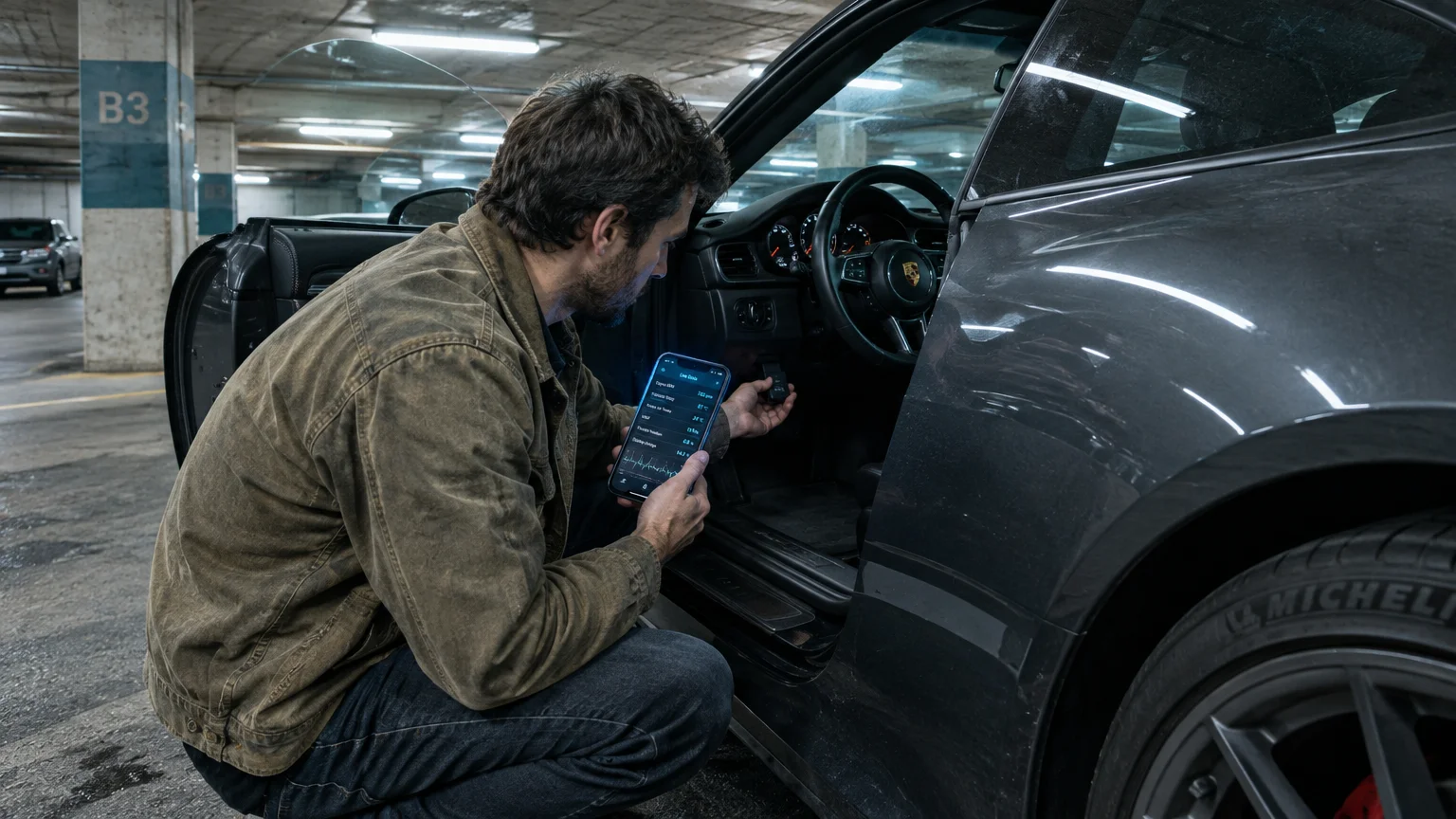
Carry a reliable OBD-II diagnostic scanner capable of reading manufacturer-specific fault codes rather than only generic emissions alerts. Cheap pocket readers miss transmission, suspension, and battery-module faults that mechanics spot immediately.
Pair that scanner with a digital tire-depth gauge, a bright inspection flashlight, and a paint-thickness meter to spot hidden collision repairs. Check inside wheel wells for fresh overspray or mismatched panel bolts that hint at prior curb strikes.
If a seller refuses to let you plug in a reader or visit an independent shop for a pre-purchase inspection, walk away immediately. Spending $200 on an expert inspection routinely prevents buying a $12,000 mechanical nightmare.
How much should you budget annually for sports car maintenance and insurance?
Plan to set aside far more than the $936 national annual maintenance average before bringing home any European or exotic coupe. Models like the Jaguar F-Type, Maserati GranTurismo, and Porsche 911 routinely demand $1,000 to $1,500 or more annually just for baseline upkeep.
Keep an extra emergency reserve of several thousand dollars untouched in a savings account for sudden wear items. Single bills for tires, performance brakes, or water pumps can wipe out a year’s worth of careful budgeting overnight.
Factor in steeper insurance premiums alongside routine fluid changes, soft performance rubber, and oversized brake pads. High-risk luxury performance models like the BMW M4 average $1,223 more per year for full coverage than mainstream alternatives, so obtain exact VIN quotes beforehand.
Which sports car repairs can you handle DIY, and which require a pro?
Home mechanics can comfortably tackle cabin air filters, wiper blades, battery tenders, seasonal wheel swaps, and visual brake-pad inspections using proper jack stands. Keeping simple upkeep in your own driveway saves $110 to $200 per hour in shop labor.
Leave internal engine work, camshaft variators, dual-clutch transmission servicing, center-lock wheel hardware, and complex electrical diagnostics to brand-certified specialists. Specialized torque tools and factory software prevent costly mistakes on tight-tolerance hardware.
Even routine DIY work on high-end cars carries steep parts bills that surprise first-time owners. For instance, normal maintenance parts alone on a Porsche GT3 top $1,000 before factoring in any mechanic labor.
How can digital tools and recall trackers protect you from a lemon?
Digital vehicle-history reports and automated recall monitors uncover flood damage, salvage branding, mileage rollbacks, and open factory safety campaigns before money changes hands. Running the VIN through federal recall portals confirms whether dangerous defects—like wheel-lock failures or fuel leaks—remain unfixed.
Combine online history checks with digital service apps that log fluid intervals, tire rotations, and alignment readings over time. Clear digital records protect your engine in city traffic and prove meticulous care when you eventually sell the car.
Also inspect online owner forums and technical service bulletins for the exact model year you plan to buy. Knowing about common wet-sump engine rattles or cooling-pipe leaks lets you verify repairs before handing over cash.
Protect Your Budget Before You Turn the Key
Owning a fast coupe in the city should bring driving joy rather than anxiety every time a warning chime sounds. Smart preparation turns intimidating repair averages into predictable, manageable expenses.
Take 15 minutes this week to run your vehicle—or your top shopping candidate—through federal recall lookups and repair calculators. Book an inspection with a marque specialist before signing anything, and schedule overdue fluid or brake checks before your next commute.