City traffic punishes your car long before the odometer shows high mileage, and several critical components often wear out by 30,000 miles. Catching those parts early helps you avoid sudden breakdowns, unsafe stopping distances, and surprise repair bills.
Most drivers assume major repairs begin after 60,000 miles, yet stop-and-go commutes, potholes, and harsh weather accelerate wear right away. You can prevent expensive damage when you know which systems fail first and what warning signs to watch for.
Below, you will find clear inspection thresholds, current replacement cost benchmarks, and simple habits that protect your car and your budget.
Why 30,000 Miles Is a Turning Point for Your Vehicle
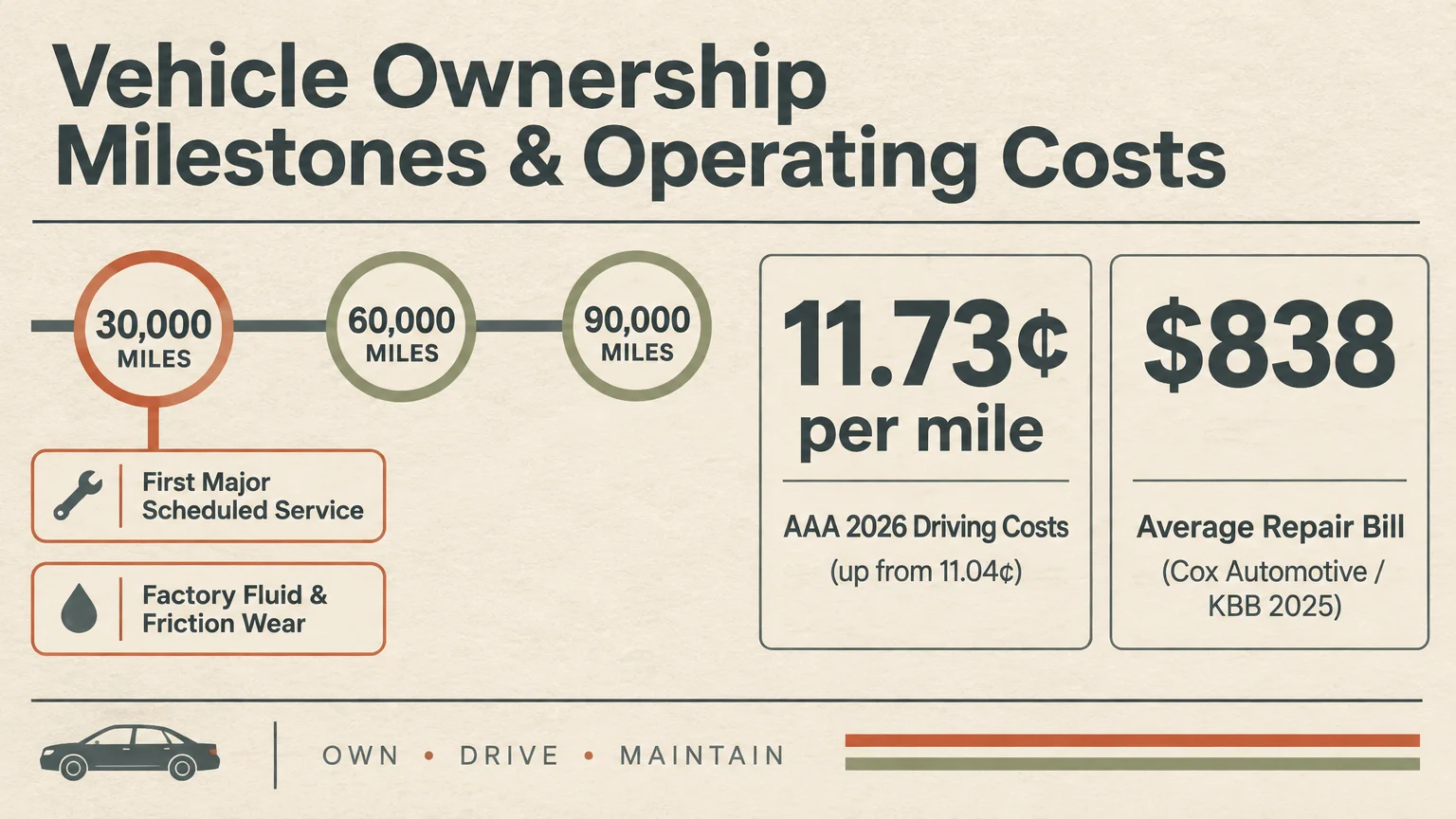
According to AAA, 30,000 miles marks a vehicle’s first major scheduled maintenance milestone, followed by bigger checks at 60,000 and 90,000 miles. At this point, factory fluids, filters, and high-friction components have absorbed years of heat, moisture, and road shock.
Skipping service at 30,000 miles rarely causes an immediate breakdown, which tricks many urban drivers into delaying routine inspections. Unfortunately, small wear issues compound quietly until a routine replacement turns into an emergency repair.
Driving expenses also add up faster than many owners realize over the first few years of ownership. AAA’s 2026 Your Driving Costs study estimates routine maintenance, repairs, and replacement tires on a new vehicle average 11.73 cents per mile—up from 11.04 cents per mile in 2025.
When a neglected wear item fails completely, the repair bill often hits hard. Cox Automotive and Kelley Blue Book data from 2025 puts the national average car repair bill across all makes and repair types at $838.
Urban driving accelerates this timeline because every mile in dense traffic demands far more mechanical work than steady highway cruising. You brake at dozens of intersections, idle at long lights, and steer over uneven pavement and speed humps.
Reviewing your vehicle maintenance schedule at 30,000 miles lets you replace worn parts on your own terms. You can explore AAA’s auto repair resources to align factory intervals with your daily driving conditions.
1. Brake Pads and Rotors
Nothing takes more abuse in city traffic than your braking system. Every red light, delivery truck, and sudden lane change converts kinetic energy into intense friction and heat.
How Fast Urban Driving Wears Down Brake Pads
AAA gives passenger car brake pads a broad lifespan of 30,000 to 80,000 miles, while Les Schwab and Kwik Fit cite 30,000 to 70,000 miles. Your actual mileage depends heavily on where and how you drive.
Front brake pads handle roughly 60% to 70% of your car’s stopping force, so they usually wear out around 30,000 to 50,000 miles. In heavy stop-and-go city traffic, front pads often reach their limit between 20,000 and 30,000 miles.
Vehicle weight also accelerates friction wear on modern crossovers, SUVs, and heavy commuter cars. Aggressive acceleration followed by late, hard braking forces your pads to scrub off speed far more quickly than smooth coasting.
Warning Signs and Exact Thickness Thresholds
Most brake pads include a small metal tab designed to squeal when friction material wears thin. Never ignore a persistent high-pitched chirp when you slow down at neighborhood speeds.
Watch for other symptoms such as longer stopping distances, a brake pedal that feels softer than usual, or dark brake dust coating your front wheels unevenly. Pulsation through the steering wheel or pedal often signals warped or overheated brake rotors.
If you hear a harsh metallic grinding sound, stop driving as soon as safely possible and book an inspection. Grinding means the friction material is gone and the steel backing plate is chewing directly into the rotor.
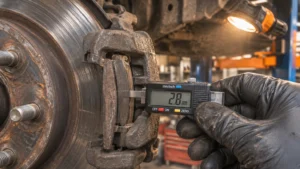
Mechanics measure pad life in millimeters rather than guesswork. Brembo notes that new automotive brake pads start with 10 to 12 mm of friction material and recommends replacement once thickness drops below 3 mm.
Firestone similarly cites 3 to 4 mm as the standard replacement threshold for safe stopping performance. Once pads fall into that range, heat builds up faster and stopping power drops noticeably in emergency maneuvers.
Brake Replacement Costs and How to Protect Your Rotors
Replacing pads on time keeps your repair bill manageable, whereas waiting until metal scrapes metal drives costs sharply higher. According to AAA, replacing brake pads alone typically runs $150 to $350 per axle, or $300 to $700 for both axles.
Adding new rotors raises AAA’s estimate to $250 to $500 per axle. National repair data shows even wider swings depending on your vehicle model and local labor rates.
RepairPal data updated in September 2026 places the national average for brake pad replacement at $335 to $394 per axle, including $122 to $179 for labor and $213 to $215 for parts. Brake rotor replacement alone averages $574 to $698 per axle.
A complete pad-and-rotor replacement averages $909 to $1,092 per axle on RepairPal, reaching $1,818 to $2,184 for all four wheels. Kelley Blue Book reported a March 2025 average of $548.65 to $629.04 for combined pad-and-rotor service.
Where you book the work also changes what you pay. Dealership brake pricing generally runs 30% to 40% higher than independent repair shops using comparable OEM-grade parts.
You can inspect pad thickness through open wheel spokes using a flashlight, or ask your technician to record millimeter measurements during every tire rotation. Changing your driving rhythm—looking two blocks ahead and coasting toward red lights—also cuts brake heat dramatically.
2. Tires
Your tires are the only four patches of rubber connecting your car to the pavement. Even when sidewalls look clean and shiny, tread rubber wears away steadily over 30,000 miles of rough city streets.
Why Tires Often Wear Out Before Their Mileage Rating
Standard passenger tires generally last 25,000 to 50,000 miles, while longer-rated all-season tires can reach 35,000 to 75,000 miles or three to five years. Mileage warranties assume ideal alignment, frequent rotations, and moderate driving habits.
Potholes, utility trench plates, and tight parking-garage turns scrub rubber off tire shoulders faster than highway miles. One hard curb impact can knock your suspension out of alignment and shred a fresh set of tires in a single season.
Electric vehicle owners face an even steeper wear curve before the 30,000-mile mark. Michelin reports that EV tires wear roughly 20% faster than tires on comparable gas vehicles because heavy battery packs and instant torque put extra stress on tread blocks.
Combined testing from Michelin and Consumer Reports shows 20% to 40% faster tire wear on electric models. That pace turns a 50,000-mile-rated tire into a 30,000- to 40,000-mile replacement item.
J.D. Power’s 2024 U.S. Original Equipment Tire Customer Satisfaction Study also documented lower satisfaction among EV owners due to faster-than-expected tread wear. Checking tread depth early protects EV and gas drivers alike from premature blowouts.
Tread Depth Rules, Wet Braking, and Crash Risks
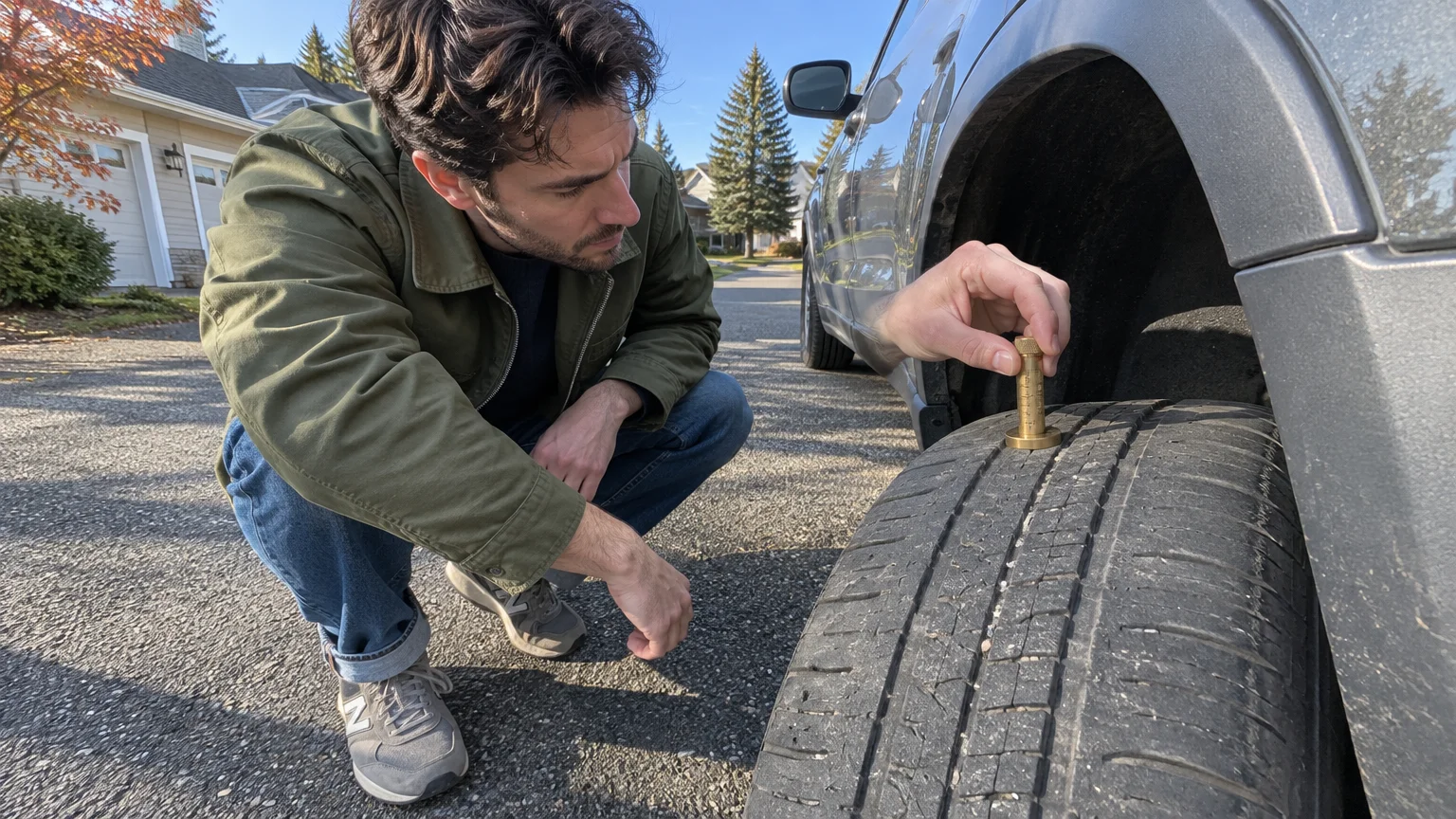
The National Highway Traffic Safety Administration (NHTSA) advises replacing tires when tread reaches 2/32 of an inch, which serves as the legal minimum in most U.S. states. Wait until that legal floor, however, and wet-weather grip is already compromised.
In the UK, where the legal minimum is 1.6 mm, The AA recommends changing tires once tread drops below 3 mm and before reaching 2 mm. Replacing tires early gives rain channels room to clear standing water under your wheels.
AAA wet-braking tests prove why that extra millimeter matters in a sudden downpour. Tires with 4/32 inch of tread improve stopping performance by 33% compared to tires worn down to the 2/32-inch minimum.
Driving on worn tires at highway speeds in wet conditions increases average stopping distances by 43%, adding 87 extra feet to your braking path. That extra distance is more than enough to turn a close call into a rear-end collision.
NHTSA estimates that nearly 11,000 tire-related crashes and more than 600 deaths occur every year across the United States. Drivers face three times the risk of crashing when operating vehicles with poor tire condition.
Check the NHTSA tire safety guidelines for recall lookups, load-rating explanations, and seasonal inspection checklists. Staying compliant with tread-depth laws keeps both your safety margin and your insurance standing intact.
Inflation, Rotation, and Tire Replacement Costs
Proper air pressure is the easiest way to stretch tire life toward the upper end of its rating. NHTSA notes that maintaining correct tire pressure extends average tire life by 4,700 miles and saves up to 11 cents per gallon on fuel.
Always check pressure with a gauge once a month while tires are cold, using the numbers printed on the driver’s door-jamb sticker rather than the maximum pressure molded into the sidewall. Temperature drops in autumn can pull pressure down quickly and trigger your dashboard warning light.
Regular rotations prevent front tires from wearing bald while rear tires still look half new. The Tire Industry Association recommends rotating tires every 5,000 to 7,000 miles, while Kelley Blue Book recommends every 5,000 to 8,000 miles.
If you drive an all-wheel-drive or four-wheel-drive vehicle, mismatched tire wear creates an expensive mechanical hazard. AAA warns that replacing just one tire without matching tread depth across all four wheels can damage transmission or drivetrain components.
Budgeting ahead helps soften the shock when replacement day arrives. Consumer Reports members paid an average of $212 per tire in 2025, down slightly from $223 in 2024.
Out-the-door pricing for a complete set of four tires typically falls between $500 and $1,200 depending on wheel diameter and speed rating. Adding a four-wheel alignment runs roughly $120 at many shops, or $168.66 to $197.64 according to Kelley Blue Book estimates.
3. Engine Air Filters and Cabin Air Filters
Filters rarely create loud noises when they clog, so urban drivers often forget they exist until airflow drops or a musty odor fills the cabin. Both filters sit directly in the path of soot, brake dust, pollen, and construction grit.
How City Air Affects Engine Breathing and Power
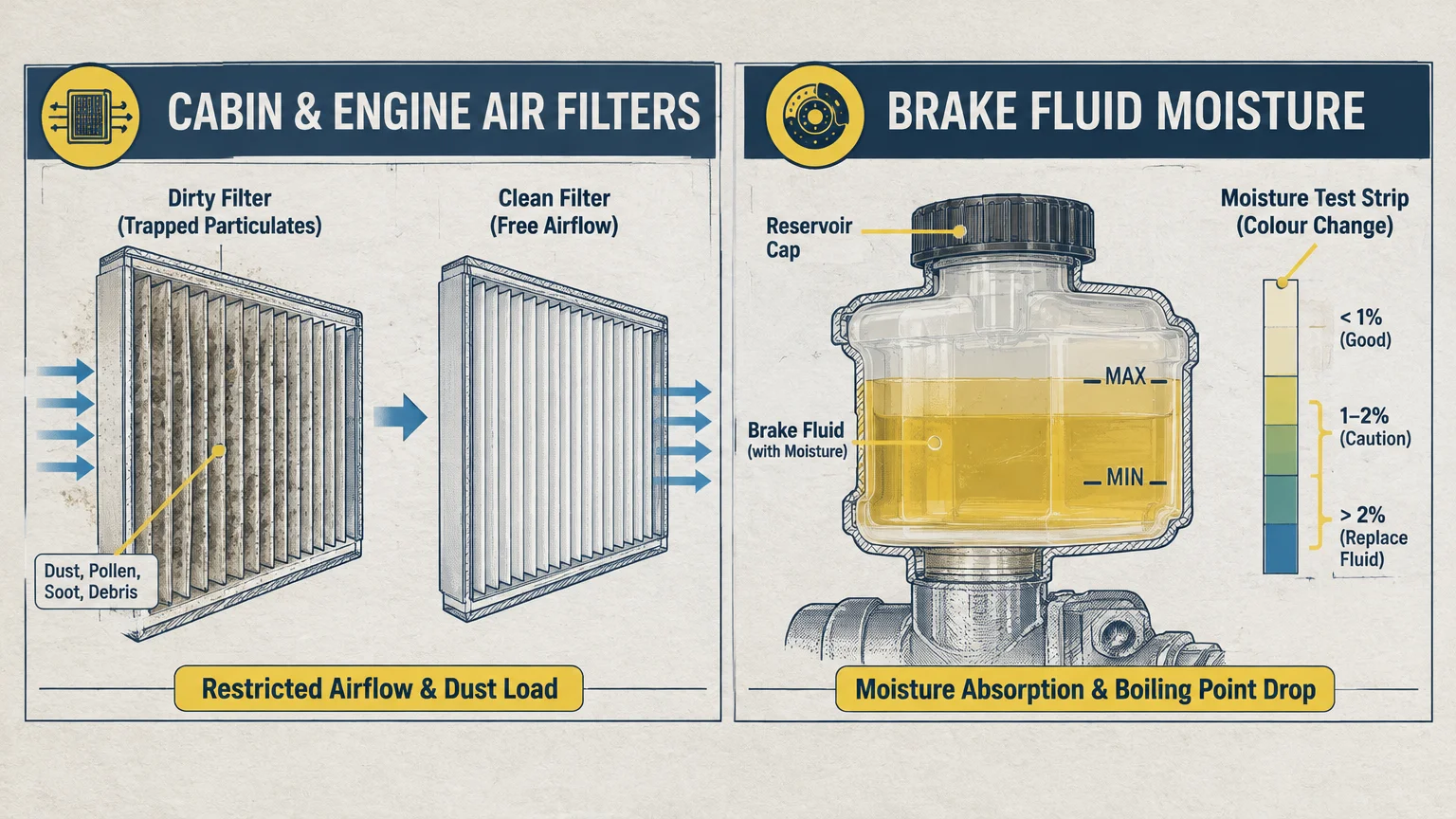
AAA and AAA Club Alliance cite a general air filter replacement range of 15,000 to 30,000 miles. In clean suburban driving, modern engine air filters often last 20,000 miles or more without restriction.
Drivers navigating dusty construction corridors, unpaved alleys, or heavy industrial traffic may need new filters much sooner. Kelley Blue Book notes replacement intervals can shrink to 5,000 to 15,000 miles in dusty environments.
Many drivers assume a dirty engine air filter ruins fuel economy, yet modern electronics compensate differently than older engines did. Research from the U.S. Department of Energy, cited by AAA, found that engine air filter condition has no significant impact on fuel economy in modern fuel-injected engines.
That does not mean you should ignore a blackened, debris-packed filter until 50,000 miles. The Department of Energy also notes that a severely clogged filter reduces maximum engine power output when you merge onto a fast highway.
You can review the Department of Energy’s vehicle maintenance guidance to separate genuine fuel-saving habits from outdated myths. A fresh engine air filter still keeps abrasive grit out of your intake sensors and throttle body.
Cabin Air Quality and Filter Replacement Costs
Your cabin air filter cleans the air flowing through your heating, ventilation, and air-conditioning vents. By 30,000 miles, urban pollution, fallen leaves, and moisture often pack its pleats tight.
Watch for weak blower airflow on high fan settings, stale odors when the A/C starts up, or sluggish windshield defogging on humid mornings. Poor defogging turns into a direct visibility hazard during sudden rainstorms or freezing commutes.
Shop labor makes filter changes seem far pricier than the parts themselves. RepairPal estimates updated in September 2026 place average shop replacement for an engine air filter at $79 to $99, split between $41 to $43 for parts and $38 to $56 for labor.
Kelley Blue Book notes that engine air filter parts alone typically start around $25, climbing above $200 only on specialty or exotic cars. For cabin air filters, RepairPal estimates $91 to $114 at a shop, covering $47 to $48 in parts and $45 to $66 in labor.
Doing both swaps yourself cuts those bills dramatically. Filterbuy estimates in July 2026 put DIY cabin filter costs at just $15 to $50.
Check your owner’s manual before buying parts so you match the exact housing clips and airflow direction arrow. Most engine filter boxes open with simple metal latches, and most cabin filters sit right behind the glovebox.
4. Windshield Wiper Blades
Wiper blades cost less than almost any other safety component on your car, yet worn rubber compromises visibility faster than almost anything else. Most urban drivers burn through two or three sets before crossing 30,000 miles.
Why Rubber Blades Degrade Long Before 30,000 Miles
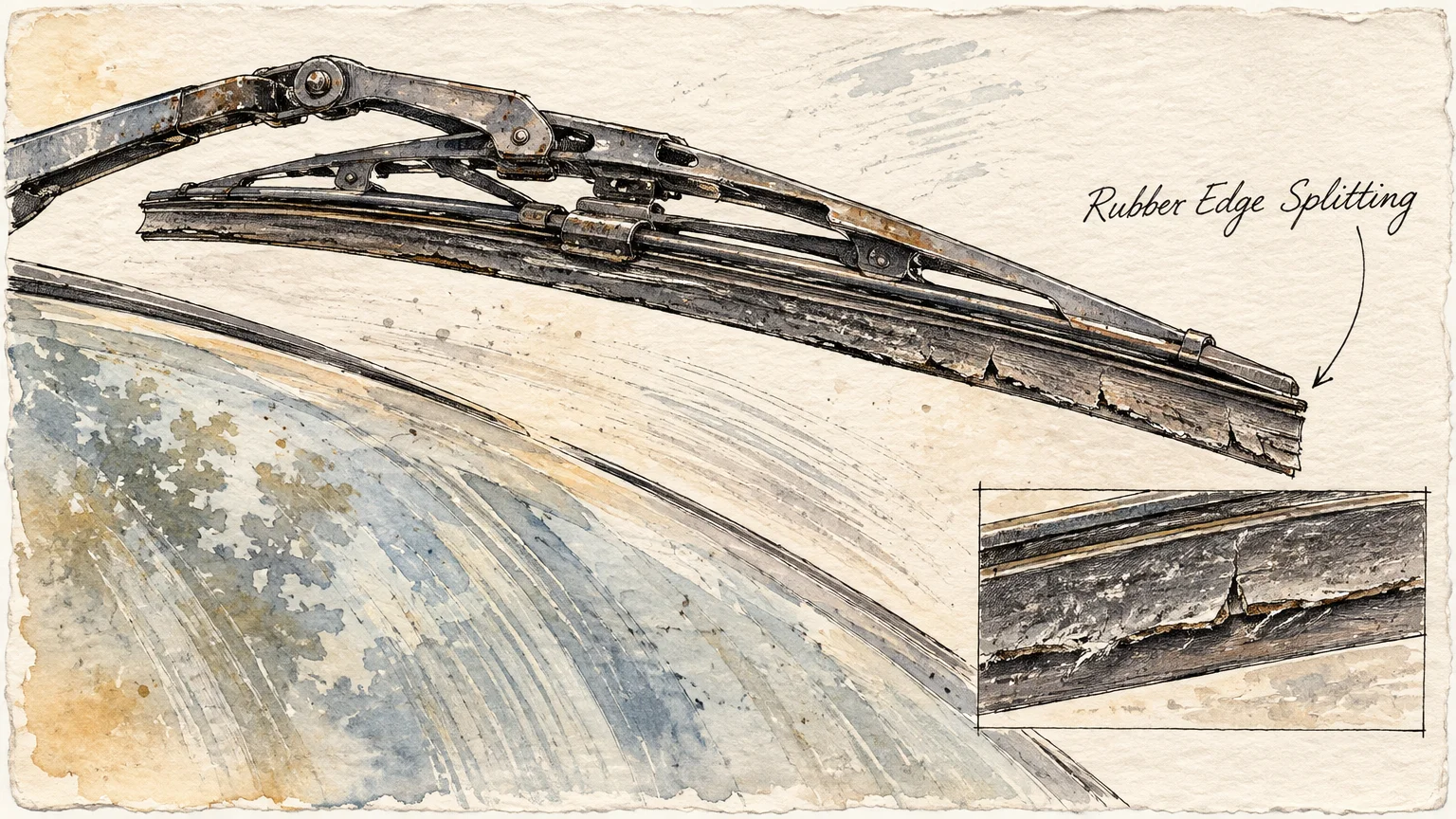
Kelley Blue Book recommends replacing windshield wiper blades every 6 to 12 months, or roughly every 10,000 miles. Unlike brake pads or tires, rubber wiper edges age even while your car sits parked outdoors.
Summer sunlight bakes UV radiation into the rubber, leaving tiny cracks along the wiping edge. Winter road salt, tree sap, bird droppings, and frost then tear those brittle edges into ragged strips.
Turning on wipers across a dry, gritty windshield or a frozen sheet of ice accelerates tearing immediately. That single habit can ruin a fresh set of blades in one morning commute.
Clear Visibility Habits and Replacement Pricing
Replace your blades as soon as they chatter across the glass, skip wide arcs, or leave hazy streaks right in your line of sight. At night, smeared road film scatters oncoming headlights into blinding glare across the entire windshield.
Keeping functional wipers also matters legally, because officers can cite drivers for obstructed views or malfunctioning safety equipment. Never gamble with poor visibility during heavy urban downpours.
Paying a repair shop to swap wipers costs surprisingly more than doing it in your driveway. RepairPal estimates updated in September 2026 average $101 to $123 at a shop, including $66 to $73 for parts and $34 to $50 for labor.
AAA lists basic DIY wiper blade replacements at $10 to $45, and most auto parts stores will even install new blades in the parking lot when you buy them. Keep your windshield washer reservoir topped up with season-appropriate fluid—especially freeze-protected fluid before winter arrives.
Wiping the rubber edge gently with a damp paper towel whenever you refuel clears away oily grit and helps new blades glide quietly. In freezing weather, thaw ice with your defroster and an ice scraper before switching on the wiper stalk.
Two Hidden 30,000-Mile Checks You Should Not Skip
Beyond those four everyday wear items, two vital supporting components frequently reach critical decision points right around 30,000 miles. Including both on your inspection checklist keeps minor age-related wear from stranding you.
Brake Fluid Moisture Contamination
Brake fluid works under extreme hydraulic pressure, and standard DOT 3 and DOT 4 fluids absorb moisture from the air over time. Water contamination lowers the fluid’s boiling point and promotes internal corrosion inside calipers and antilock braking valves.
Carfax and standard repair schedules commonly recommend flushing brake fluid every 2 to 3 years. Several automakers—including Hyundai, Kia, Toyota, Lexus, and Subaru severe-duty schedules—specify 20,000- to 30,000-mile brake fluid intervals.
Inspecting fluid color is a simple habit, though clean-looking fluid can still hold hidden moisture. Testing strips or electronic moisture pens tell a technician within seconds whether a flush is overdue.
Carfax estimates a typical brake fluid flush at $100 to $160 for most passenger vehicles using roughly one quart of DOT 3 or DOT 4 fluid. Kelley Blue Book estimates an average shop flush at $173 to $205.
The 12-Volt Battery Load Test
Modern vehicles rely on a healthy 12-volt battery to power computers, start-stop systems, safety sensors, and infotainment screens—even in hybrid and electric cars. Heat kills batteries faster than winter cold, even though cold mornings expose weak cranking power first.
AAA reports that 12-volt batteries typically last 3 to 5 years, or roughly 36,000 to 60,000 miles for an average driver. In hot southern climates where under-hood temperatures exceed 200 degrees Fahrenheit, average lifespan drops to approximately 3 years, compared to 5 years or longer in cooler northern states.
Kelley Blue Book similarly cites a typical lifespan of 3 to 4 years, or 4 to 5 years and 50,000 miles depending on climate and short-trip charging habits. Frequent short urban errands leave little highway driving time for the alternator to fully recharge the battery.
AAA recommends annual battery load testing once a 12-volt battery reaches 3 years old. RepairPal estimates updated in September 2026 place national average battery replacement at $456 to $493, including $394 to $403 for parts and $61 to $90 for labor.
A Practical Maintenance Strategy for City Drivers
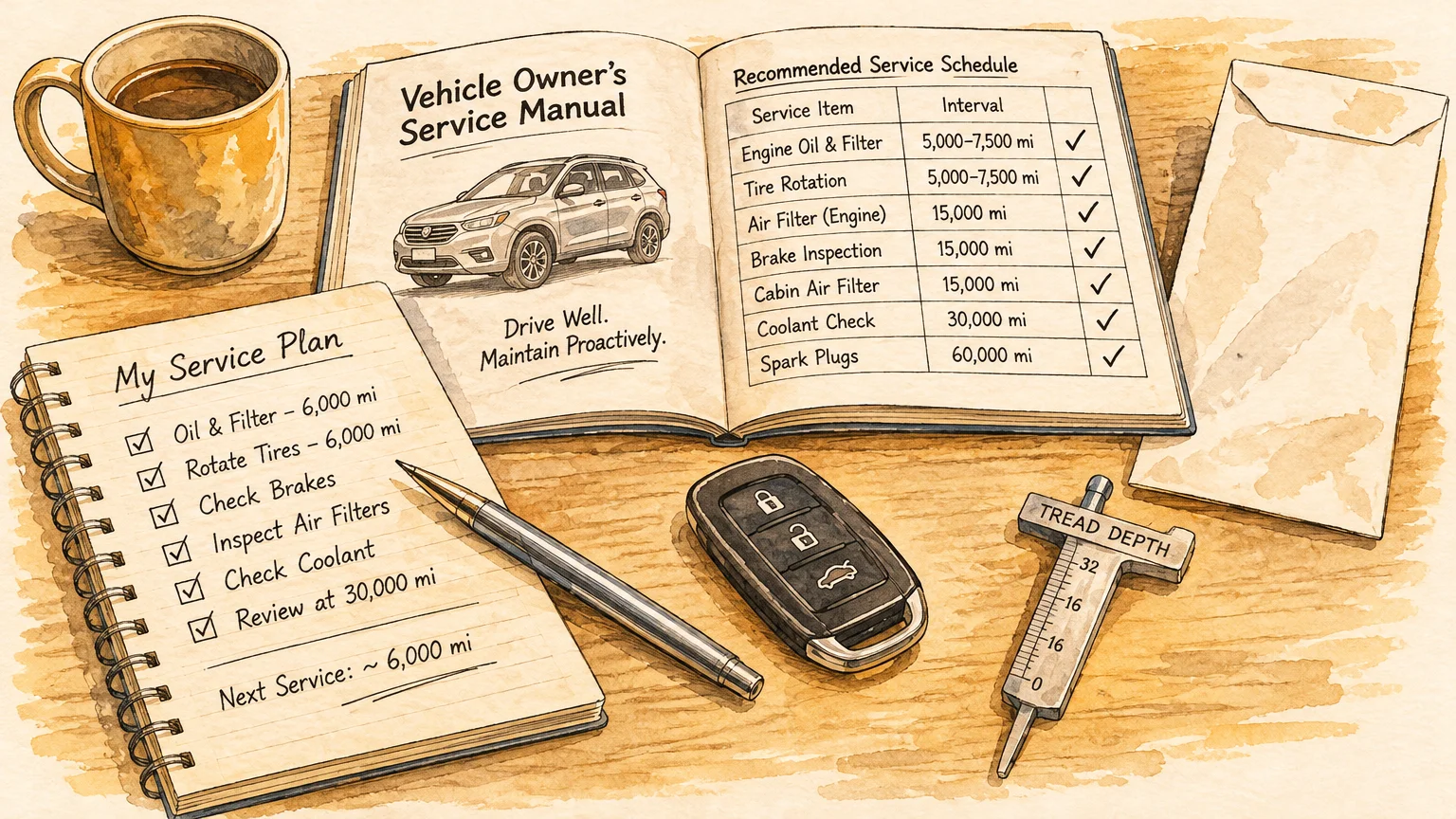
You do not need mechanical training to stay ahead of 30,000-mile wear; you just need a repeatable routine. Grouping checks by season and mileage keeps costs predictable and cuts out panic visits.
Start by checking your owner’s manual for the severe-service maintenance schedule rather than assuming you fall under normal driving conditions. Short trips under five miles, stop-and-go commuting, extreme heat, and freezing winters almost always classify as severe service.
Every month, check your cold tire pressure and glance at wiper edges and washer fluid level. Every 5,000 to 7,000 miles, rotate your tires and ask the technician for exact millimeter readings on front and rear brake pads.
Use an independent repair shop with certified technicians for major brake, fluid, and alignment jobs while handling filters and wiper blades at home. You can benchmark fair local estimates ahead of time using RepairPal’s repair cost estimator or review model-specific schedules inside Kelley Blue Book’s car advice guides.
Keep dated receipts and mileage logs in a glovebox folder or smartphone app, because documented service protects both factory warranty claims and future resale value. Buyers pay more—and negotiate less—when they see proof of disciplined 30,000-mile upkeep.
Frequently Asked Questions
What basic tools help me track 30,000-mile wear at home?
Carry a digital tire pressure gauge, a simple tread-depth gauge marked in 32nds of an inch, and a small LED flashlight in your glovebox. Those three items let you verify tire safety and spot thin brake pads in under five minutes.
A basic Bluetooth OBD-II scanner or maintenance tracking app also helps you record exact dates and mileages for filter swaps and rotations. Always follow vehicle jacking and safety-stand rules before ever lifting a car off the ground.
How much should I budget for a 30,000-mile service visit?
Your bill depends on which wear items need immediate replacement rather than inspection alone. Remember that the national average car repair bill sits at $838, while routine maintenance and tires average 11.73 cents per mile over five years.
If your car needs only filters, wipers, a brake fluid flush, and a tire rotation, doing the filters and wipers yourself can hold shop costs near $100 to $205 for the flush and rotation. If front brake pads and rotors or new tires are due at the same time, expect to budget $550 to $1,200 or more.
Which 30,000-mile jobs are safe for DIY versus a professional mechanic?
Windshield wiper blades, cabin air filters, engine air filters, tire pressure checks, and tread inspections are safe, tool-light DIY jobs for almost any driver. Swapping those parts yourself routinely saves $100 or more in combined shop labor.
Leave brake pad and rotor replacements, brake fluid flushes, tire mounting, four-wheel alignments, and complex 12-volt battery replacements to qualified professionals. Many modern vehicles require electronic parking-brake retraction or battery management system registration using factory-grade diagnostic scanners.
Can digital dashboard reminders replace physical inspections?
Dashboard service lights and smartphone maintenance apps excel at reminding you when months or miles pass, yet sensors rarely measure real mechanical wear accurately. Most cars lack sensors that track uneven inner tire wear, moisture inside brake fluid, or slight caliper sticking.
Pair digital reminders with visual inspections twice a year—once before winter freezing arrives and once before summer heat peaks. Combining technology with five minutes of hands-on inspection catches almost every early-wear surprise.
Take Control of Your 30,000-Mile Maintenance This Week
Check your odometer today, and if your car sits anywhere between 20,000 and 35,000 miles, walk around it with a flashlight and tire gauge this weekend. Measure your tread depth, look closely at your front brake pads, and test your wipers before the next rainstorm hits.
If anything looks borderline, book an inspection with a trusted local shop before a worn pad scores your rotors or bald rubber stretches your stopping distance. Staying ahead of these four wear-prone parts keeps your daily commute safer, smoother, and far less expensive.